General Corpus
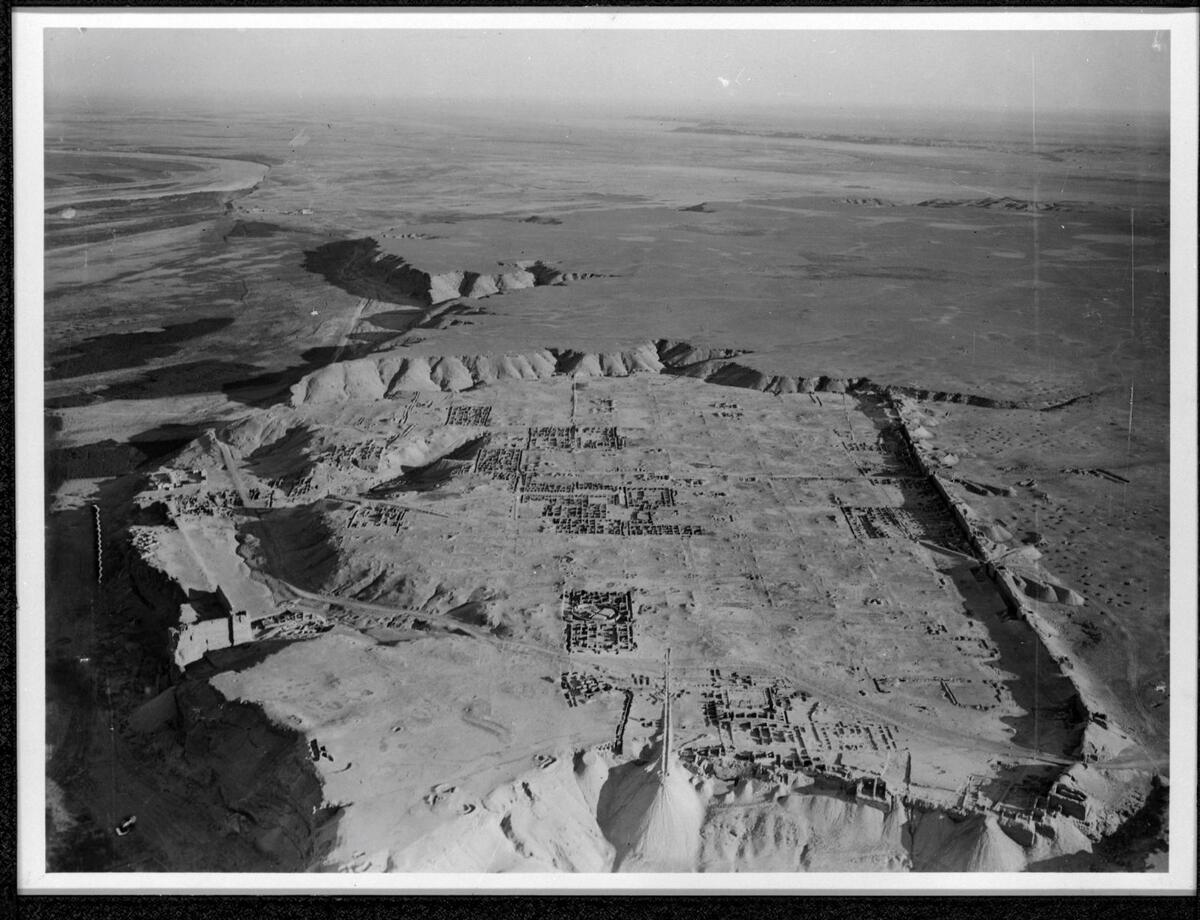
From YUAG, Dura-Europos Collection
During the fifth campaign of archaeological excavations at the Dura-Europos complex, in c. 1931-1932, a vast corpus of fragmentary parchments and papyri resurfaced inside what is known as Room W13 - a section of the Temple of Artemis Azzanathkona, inside the Roman Army’s garrison, that bordered the town’s northern defense wall (visible in the foreground of the image to the left). While the resurfaced papyri, known as P. Dura, include a few literary and civil specimens, a decided majority (P. Dura 54 - 145) concern Cohors XX Palmyrenorum, an auxiliary unit of the Roman Army stationed at Dura and whom we only know through this very corpus, along with some inscriptions at the site. Priceless to our knowledge about Cohors XX, the corpus also proves revealing about Roman martial structure and culture more generally, supplementing familiar aspects as well as revealing new ones.
In fact, numerous and extensive examples of previously-unknown types of military documents abound in the corpus, with nearly all the texts having no known parallels elsewhere. Ironically, the conditions in which they appeared on site suggest that they possessed lesser value to their contemporaries. During the final siege of Dura in 256/257 CE, the Romans reinforced the town’s north wall with ramparts to safeguard against the incoming (and eventually victorious) Sassanian army. In doing so, the Romans vacated all rooms adjacent to the wall, and filled each room with every available object, including dismissed documents that they felt didn’t warrant keeping. Covered by mud and raw materials used to build the rampart itself, the papyri were spared decay and preserved in relatively favorable conditions until their re-emergence.